
The Catalan circus sector launched its awards on the evening of December 20, 2010, inside the Raluy family circus tent in Barcelona's Port Vell. At the Historic Raluy Circus, we cherish that night with special affection, because the first gesture of the brand-new Premis Zirkòlika de Circ de Catalunya (Catalan Circus Awards) was to recognize the very place that was hosting them.
The first Night of Circ
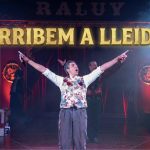
The gala was called Nit de Circ (Night of the Circus) and was conceived as what it should be: not a ceremony with seats and a lectern, but a spectacle. It was hosted by Claret Papiol, a clown and educator with a command of language recognized throughout the profession, and it began with a brand-new act created for the occasion by ten Catalan artists. The velvet seats were filled with fellow performers, and the circus acted as host to a sector that until then had never had its own night.
Behind the initiative was Zirkòlika magazine, the first Spanish publication specializing in circus arts. Their idea was simple yet essential: to give Catalan circus the same tool that theater and dance had enjoyed for decades—an annual awards ceremony decided by a jury of professionals, forcing the sector to examine and discuss its own work. That first call for entries brought together more than thirty-five candidates across twelve categories, evaluated by a jury composed of Marta Almirall, Marta Borreguero, Clàudia Saez, Carles Cugat, Marcel Barrera, Manel Sala, Oriol Raventós, and Vicent Llorca.
The Jurat Special Award to the Raluy family
Among the awards that night, the jury reserved its Special Prize for the Raluy family's dedication to the circus. The following day, the newspaper Ara published the exact wording of the award: it was given "for endowing the traditional circus with undeniable quality and relevance ." It's a short sentence, but it says a lot. It wasn't rewarding nostalgia or the antiquity of the wagons: it was rewarding their success in ensuring that the classic circus remained a spectacle of the present, capable of moving a 2010 audience with the same language it used to move their grandparents. That is precisely the work of the family, and seeing it expressed this way by their own colleagues was worth more than any headline.
Who else won that night
The complete list of winners from that first edition is a good snapshot of the Catalan circus scene at the time. The Enfila't company won the award for best indoor show for Plecs ; Leandre, for best street show for Chez Leandre ; Los Excéntricos, for best comedy circus show for Rococó Bananas ; and Mumusic Circus, for best family show for Merci Bien . Adrian Schvarzstein was recognized for best director, Fernando Pose for his bouncing juggling act, Escarlata Circus for the staging of Devoris Causa , and Baró d'Evel for the original music of Le Sort du dedans . The audience voted for Pepa Plana and her Penélope ; the Ateneu Popular de 9 Barris received the award for best initiative promoting circus arts in Catalonia, and the Daraomai company was awarded best new company.
Looking back fifteen years later, almost all of those names still sustain the country's circus scene today. That night didn't hand out trophies: it drew a map.
Why was it celebrated here?
The fact that the first gala was held in Port Vell was neither a coincidence nor a courtesy. The circus tent has been pitched there every Christmas since 1997, and for the industry, it had become the only place in Barcelona where a true big-top circus existed, with its circular ring, its distinctive smell, and its acoustics. The Zirkòlika Awards would return to this same tent in subsequent editions, including the tenth, in 2019.
The 2010 Special Jury Prize is in dialogue with the other awards of the Historic Raluy Circus , but it has a nuance that none of them share: it was awarded by fellow professionals, at home, the first time that the Catalan circus gave itself the right to award itself.
That track is still standing, and the experience recognized by the jury remains intact. See where we are this season and book your ticket : the best place to understand an award like this is from a front-row seat.